
Agentic Security Operations: What an AI SOC Should Be

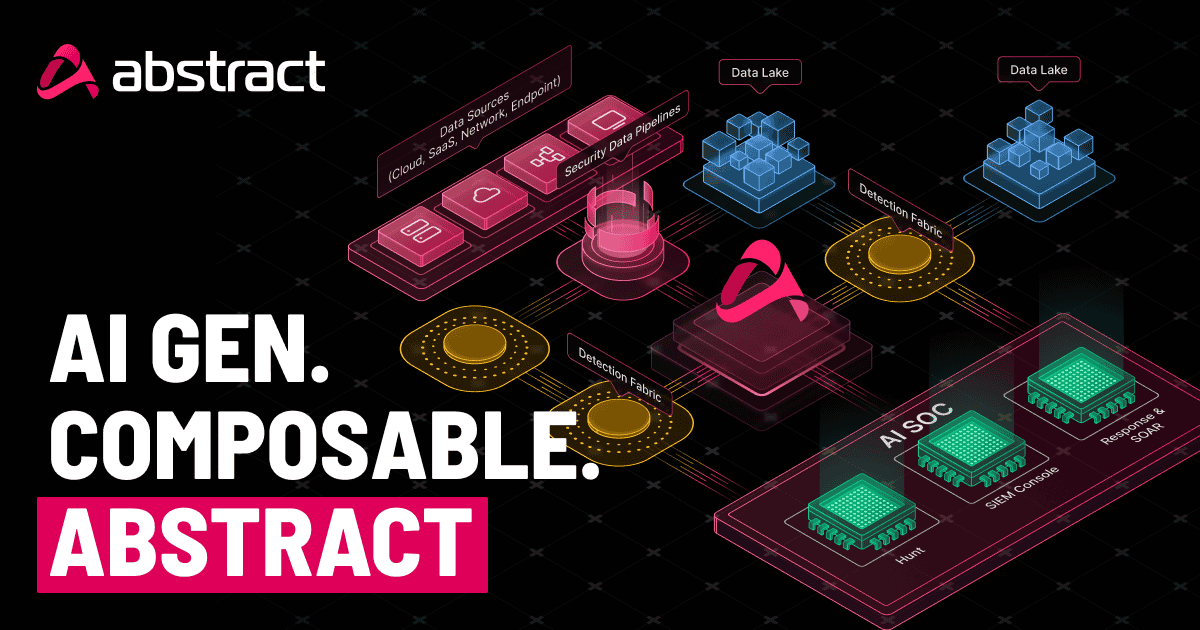
Every vendor now ships an AI-SOC or an "AI analyst." Most of them start from alerts and alerts only. This means that something else in your stack decides what is worth flagging and the AI takes it from there, triaging and summarizing what it was handed. That is useful, human analysts end up working this way too, but it inherits a ceiling: if the upstream tool missed it then the AI never sees it. If the upstream tool is noisy then the AI spends its day on noise. It won't do any uncovering of its own.
That model has run its course. Agentic security operations should begin on the data itself, not where someone else's detection ended.
Start on events, not alerts
Abstract detects on the events moving through the pipeline as well as on the alerts your other tools raise. That difference sounds academic until you watch it play out. Because detection happens in-stream on high-fidelity, normalized data, an investigation can be reconstructed end to end from the raw telemetry rather than from a single flag.
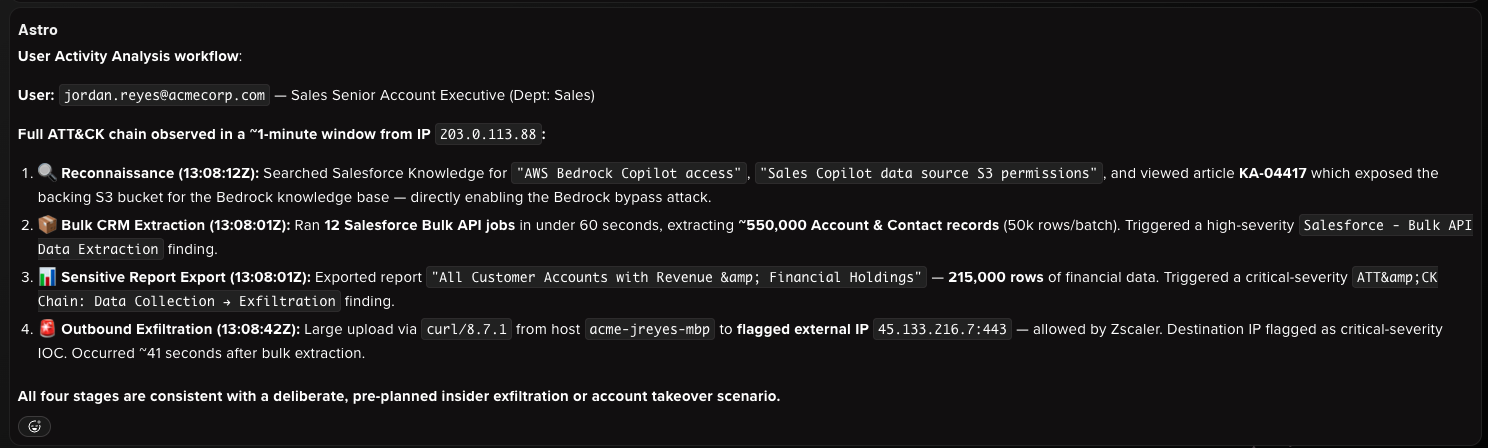
None of that depended on another product deciding to raise an alert first. The detection, the correlation, and the verdict all came from the telemetry Abstract was already processing.
Composable and unified
There is a fair objection to "one platform" pitches: nobody rips out their SIEM on a Tuesday. Good, because the problem with the typical security stack was never that it is modular. It is that the modules come from different vendors that do not share a data model, so you pay an integration tax to keep them talking and get pushed toward all-or-nothing rip and replace whenever you want to modernize.
Abstract is composable and unified. Collection, detection, retention, and agentic security operations are separate blocks that each stand on their own and drop into the stack you already run, and they share one data model, so there is no tax to move data between them. That makes it a cost-effective path rather than a forklift. Most teams start on the block that solves today's problem, usually pipeline cost, prove the value, and expand into detection, retention, and agentic security operations at their own pace. The move to agentic SecOps becomes a series of steps you choose rather than a bet you have to make all at once.
Astro is an orchestrator, not a copilot
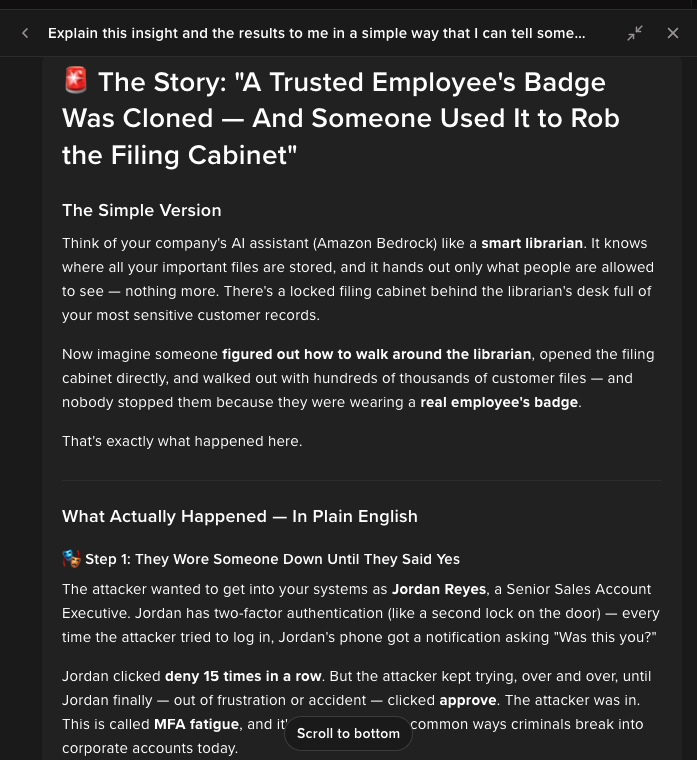
A copilot answers questions. As the agentic orchestrator inside Abstract, Astro runs the work, coordinating a set of specialized agents against your pipelines, detections, data models, and threat intelligence. You describe an outcome and Astro decides which agents to call, in what order, and whether to run them in parallel. You never address an agent directly.
A force multiplier at every tier
The point is not to replace analysts. It is to hand them the mechanical work so they spend their time on judgment. Across the tiers of a SOC that looks like this:
- L1 triage. Astro watches the queue, summarizes alerts, checks indicators against intelligence, makes an initial call, and documents escalations. It carries most of the repetitive volume.
- L2 investigation. Astro correlates events across AWS, Okta, Salesforce, and network in one pass, enriches indicators, resolves identity, reconstructs the timeline, and scopes blast radius. The analyst reviews the conclusions and owns containment.
- L3 hunting. Astro turns advisories into operationalized indicators, builds and runs hypothesis-driven hunts, tunes rules, and writes up finished intelligence. The analyst keeps the creative, intuitive work.
People punch above their weight class and a smaller team starts to operate like a larger one.
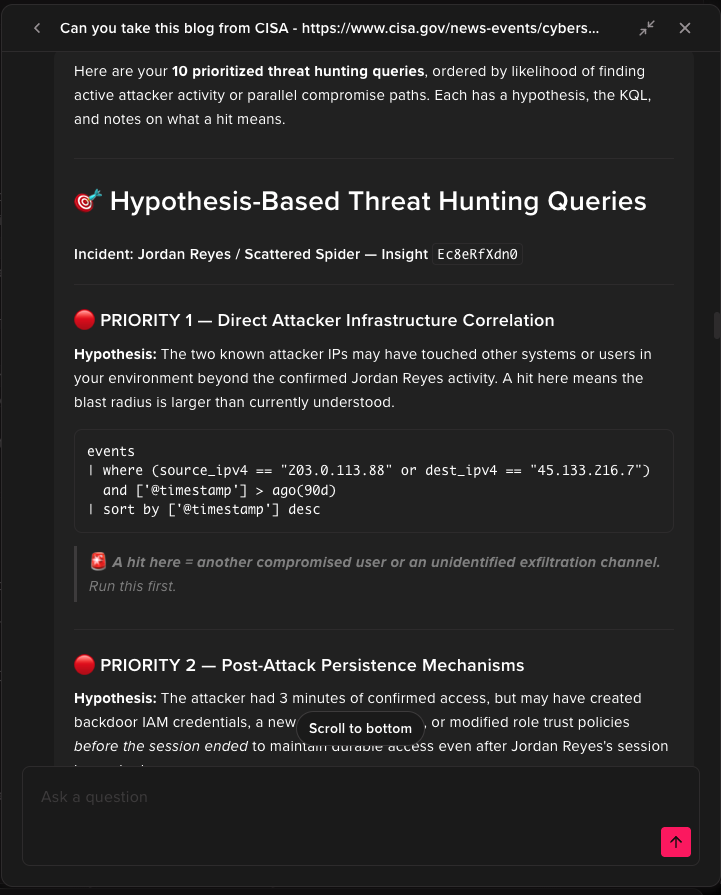
Bring the concept. Astro finds the data, builds the hunt, and shows its work.
That is what agentic security operations look like when they start on your events instead of someone else's alerts, and when you can adopt them one composable step at a time.
ABSTRACTED
We would love you to be a part of the journey, lets grab a coffee, have a chat, and set up a demo!
Your friends at Abstract AKA one of the most fun teams in cyber ;)
.avif)
Your submission has been received.